Serviced Offices in Camden
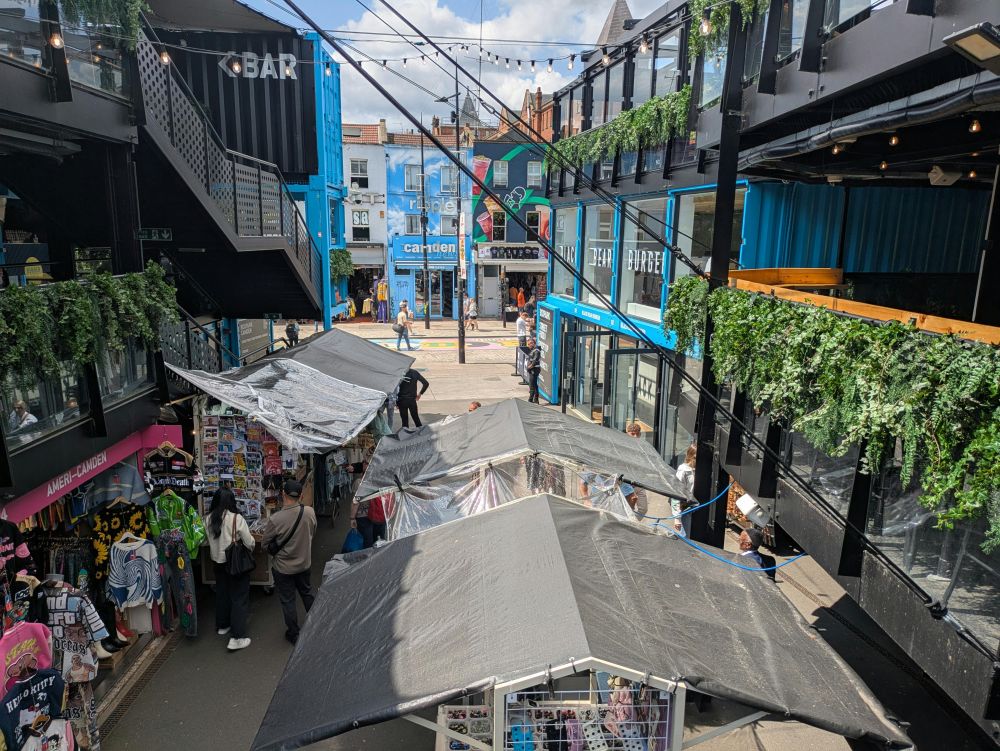
KOKO hosts world-class music. The Roundhouse stages theatrical spectacle. Camden Market embodies alternative commerce. This is London's bohemian creative quarter; where independent music labels, designers, and creative technologists work in warehouse spaces far from corporate conformity.
The Vibe
Defiantly independent and unapologetically creative. Camden resists commercial homogenisation. Street art covers the buildings. Alternative culture pervades. If your business involves creativity, independence, or counterculture, Camden feels like home. If it doesn't, you'll feel like a tourist.
The Buildings
Victorian industrial character preserved; warehouses, factories, and working-class housing converted into studios and creative spaces. The area resists gentrification's polish. Exposed brick comes raw, not renovated. Expect authentic industrial aesthetic rather than carefully curated warehouse chic.
Getting Around
Camden Town station (Northern line) is central; but exit restrictions apply during busy periods. Chalk Farm provides Northern line alternative. Camden Road (Overground) connects east-west. King's Cross is 15 minutes walk for more tube options. The area is walkable but spread out.
Who this neighbourhood suits
Best for: Independent music labels, independent designers, artists, musicians, alternative media. Businesses valuing creative authenticity over corporate conformity. Not for: Client-facing businesses needing polish, firms where dress codes matter, or anyone requiring predictable professionalism.
Highlights
- KOKO, Roundhouse, Dingwalls; iconic music venues
- Camden Market; alternative culture embodied
- £350+/desk; creative space at creative prices
- Northern line to West End in 10 minutes
- Independent spirit resisting commercial homogenisation
How it compares
Camden vs nearby alternatives:
King's Cross
- Price: £550+ (vs Camden £350+)
- Vibe: Regenerated, corporate-friendly
- Best for: Tech companies wanting legitimacy
Shoreditch
- Price: £210+ (cheaper)
- Vibe: Tech-creative, more commercial
- Best for: Startups wanting creative but investible
Transport options
| Station | Lines | Walk (mins) |
|---|---|---|
| Camden Town | Northern | 5 |
| Chalk Farm | Northern | 8 |
| Camden Road | Overground | 7 |
Pricing
Typical monthly price range (per desk): £350–£650.
Private offices typically £400-£500/desk. Creative economy pricing. (January 2026 data)
Methodology: Surveyed from managed office providers in this area. Updated quarterly.
Nearby neighbourhoods
- King's Cross (kings-cross): Regenerated campus, Google headquarters
- Euston (euston): British Library, national rail
- Islington/Highbury (islington-highbury): North London character
- Bloomsbury (bloomsbury): Academic, British Museum
FAQs
Is Camden suitable for client meetings?
Depends entirely on your clients. If they're musicians, designers, or creative types, Camden feels authentic and appropriate. If they're corporate executives or traditional professional services, the environment might undermine rather than support your pitch.
What types of creative businesses work here?
Independent music labels, recording studios, independent designers, artists, alternative publishers, creative technologists. The common thread is independence; businesses that define themselves against mainstream commercial culture rather than within it.
How does Camden compare to Shoreditch?
Camden is less commercial, more countercultural. Shoreditch has gentrified into tech-creative crossover; Camden maintains alternative edge. Shoreditch attracts investment; Camden attracts artists. Both are creative; the politics differ.
What's the market actually like?
Weekend chaos, weekday calm. Camden Market draws tourists and alternative shoppers for street food, vintage, and independent vendors. During the week, it's quieter; though lock stalls remain active. The energy is genuine, not manufactured.
Are there proper office spaces or just converted warehouses?
Both. Converted warehouse spaces dominate the creative stock. Some serviced offices provide more conventional layouts. But Camden's appeal is the unconventional space; if you want standard offices, other areas deliver better value.
What's the music scene connection?
KOKO, Roundhouse, and Dingwalls host world-class performances. The Jazz Café adds variety. For music industry businesses, proximity to venues creates natural networking. A&R types, producers, and managers operate here for access to talent and shows.
Is Camden gentrifying?
Slowly, and with resistance. The market and venues maintain alternative character. Residential areas have seen price increases. But Camden's identity proves resilient; the counterculture roots run deep enough to resist complete transformation.